

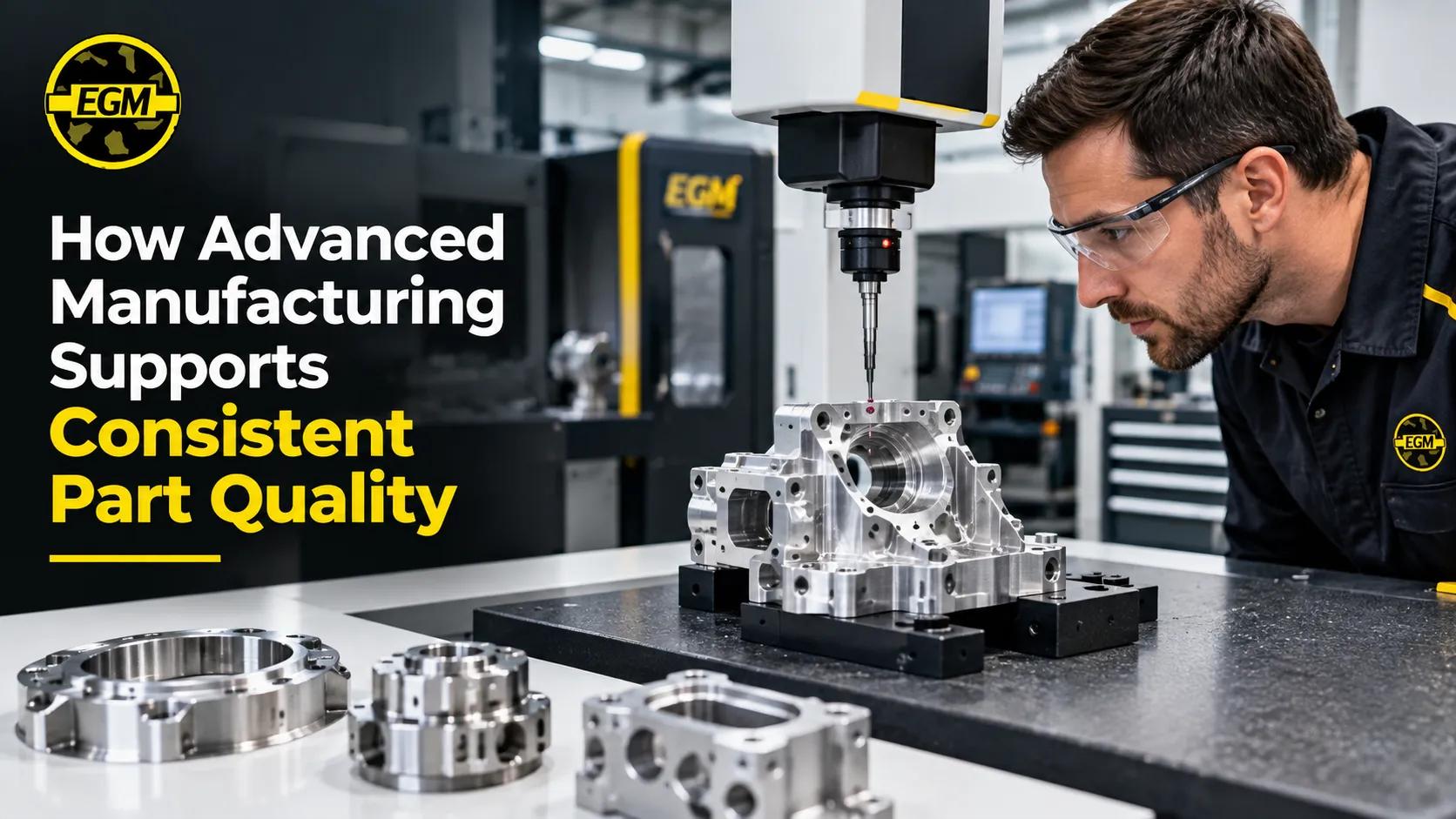
In modern manufacturing, producing parts with consistent quality is essential for meeting customer expectations and maintaining reliable product performance. Industries such as aerospace, automotive, medical, and industrial equipment often require components with accurate dimensions, smooth finishes, and dependable performance. Advanced manufacturing methods help machine shops meet these requirements by improving precision, process control, and production consistency.
The Importance of Consistent Part Quality
Consistent part quality means that every component meets the required specifications, whether a business needs a single prototype, a small batch, or a larger production run. Even small differences in dimensions or surface finish can affect how a part fits, functions, or performs in its final application.
Maintaining consistent quality can help manufacturers reduce material waste, limit rework, improve assembly efficiency, and deliver parts that meet customer requirements. For businesses that rely on custom-machined components, choosing the right manufacturing partner is an important step toward achieving these goals.
How Advanced Manufacturing Improves Precision
1. Computer-Controlled Machining
Computer Numerical Control (CNC) machining uses programmed instructions to guide cutting tools and produce components according to specified dimensions. CNC milling and turning help manufacturers repeat machining operations with a high level of accuracy when the equipment, tooling, and processes are properly maintained.
These methods are useful for producing custom components that require consistent dimensions across multiple parts. They also allow manufacturers to follow detailed designs and meet specific project requirements.
2. Multi-Axis Machining for Complex Components
Multi-axis CNC milling allows cutting tools to approach a workpiece from different angles. This capability helps machine shops produce complex shapes and detailed features with fewer setups.
Reducing the number of setups can lower the risk of alignment errors between operations. As a result, multi-axis machining can support consistent results for parts with complex geometries and tight dimensional requirements.
When choosing a multi-axis CNC milling manufacturer, businesses should consider machining capabilities, experience with complex designs, dimensional requirements, and quality-control procedures. A suitable manufacturing partner can help evaluate the part design and determine an appropriate machining approach.
3. Careful Material Selection
The material used for a component can influence its strength, machinability, surface finish, and dimensional stability. Different metals and plastics respond differently to cutting forces and heat during machining.
Selecting a suitable material for the part's intended use helps manufacturers achieve the required performance and quality. Material specifications should be reviewed before production begins to ensure they match the customer's design, operating conditions, and application requirements.
The Role of Quality Control in Manufacturing
Advanced machinery is only one part of producing reliable components. Quality control throughout the manufacturing process is also important.
Dimensional inspection: Measuring critical features helps confirm that parts meet drawing specifications and required tolerances.
Tool and machine maintenance: Regular maintenance and tool checks help reduce wear-related variation and support stable machining conditions.
Process monitoring: Reviewing machining operations can help identify problems early and reduce the risk of producing parts that do not meet specifications.
Documentation and traceability: Maintaining appropriate production and inspection records helps manufacturers review results, investigate issues, and support customer requirements.
Combining these practices with suitable inspection equipment and trained personnel helps create a more controlled production process.
Why Repeatability Matters for Short-Run Production
Short-run production often involves manufacturing limited quantities of custom components. Although the order size may be small, customers still expect every part to meet the same specifications.
A well-planned CNC process helps maintain consistency from the first component to the last. Clear technical drawings, suitable tooling, verified machine settings, and inspection at key stages can help reduce variation between parts.
This approach is also valuable when moving from prototype development to production. Lessons learned during prototyping can help refine the machining process before additional components are manufactured.
Choosing the Right CNC Machining Partner
When selecting a machine shop, businesses should consider more than equipment alone. Look for a manufacturer that understands technical drawings, communicates clearly about project requirements, and follows appropriate quality-control procedures.
Professional CNC custom parts machining services can help businesses turn design specifications into functional components for different applications. Before placing an order, customers should discuss material requirements, tolerances, surface finishes, inspection needs, production quantities, and delivery schedules.
Sharing complete specifications early helps the manufacturer identify potential challenges and plan the job more effectively. For projects with specific regulatory or customer requirements, it is also useful to ask about relevant certifications, registrations, inspection processes, and documentation capabilities.
How EGM Manufacturing Supports Precision Machining Needs
EGM Manufacturing is a precision CNC machine shop based in Sunrise, Florida. The company provides CNC milling, CNC turning, prototyping, and short-run production services for businesses that need custom-machined components.
Its machining services support projects with different design and production requirements. By discussing material choices, dimensions, tolerances, and production goals with customers, EGM Manufacturing helps businesses plan machining projects from prototype development through production.
Conclusion
Advanced manufacturing supports consistent part quality through repeatable machining processes, suitable material selection, careful process planning, and effective inspection. CNC milling, CNC turning, and multi-axis machining can help produce components that meet demanding design specifications when supported by proper maintenance and quality-control practices.
For businesses sourcing custom components, working with a capable machine shop and providing clear technical requirements can make a meaningful difference. Whether a project requires complex milled features or custom-machined parts in small quantities, a strong focus on precision and process control helps support reliable results and lasting customer relationships.